Getting paid
Everything on this site about the money you are owed, in the order you will need it. The calculators are free and need no signup, the wording is yours to copy, and the numbers all carry the source they came from.
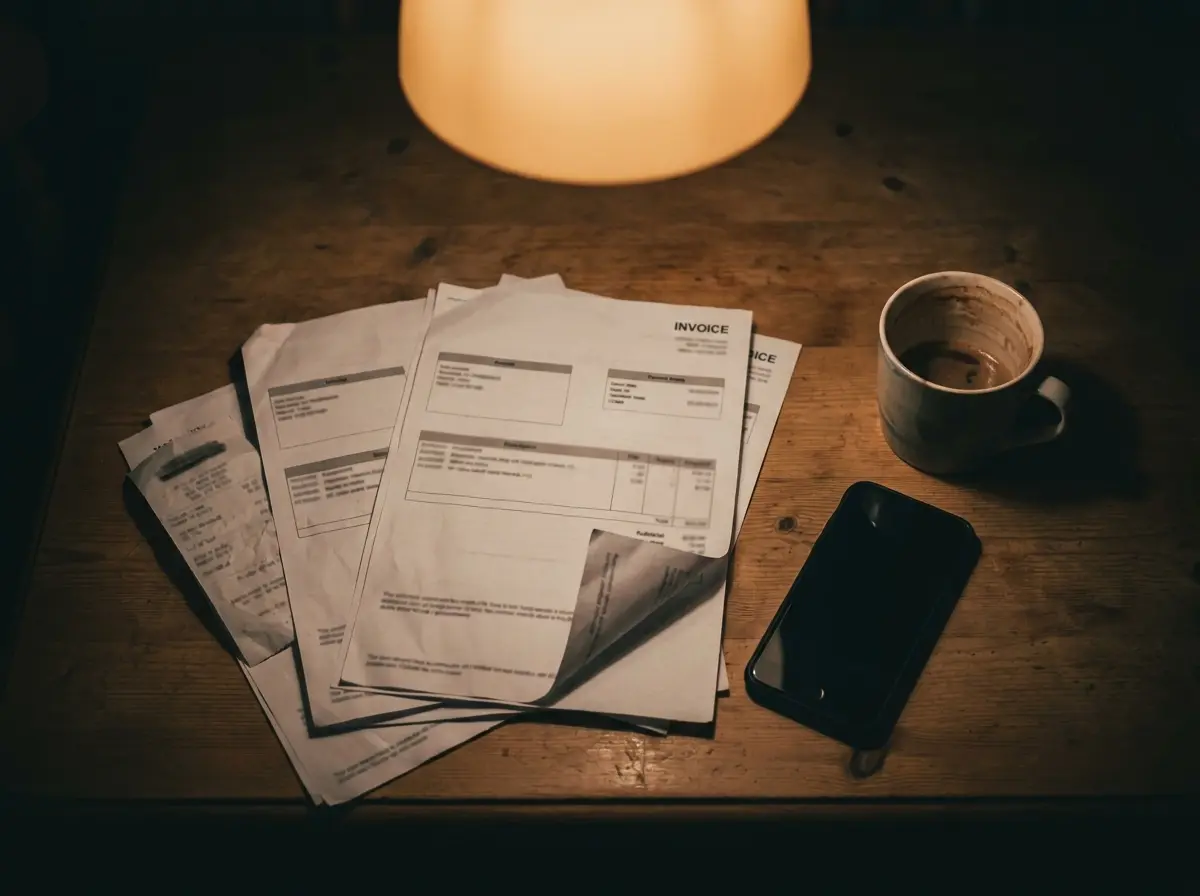
Why this matters more when there is one of you. Official research puts the time cost of late payment at 86hours a year chasing it. A firm with an office absorbs that. You cannot, because every hour on the phone to somebody's accounts department is an hour not on the tools. That is about 11 working days, or £2,200 to £3,300 of work you did not do. Our analysis shows the working.
The escalation, rung by rung
Most invoices get paid at the first or second rung. The point of knowing the whole ladder is that you stop improvising, and the customer can tell.
Day 0
Invoice the day the job finishes
This is the cheapest thing on the page and the one most often skipped. An invoice sent three weeks late tells the customer that paying it late is fine too, and it arrives long after they stopped feeling pleased with the work. Put a payment term on it. "Due within 14 days" is a term. Silence is a suggestion.
Day 7
The first reminder, and make it automatic
The reminder at seven days does more work than the phone call at forty. It lands before the invoice is forgotten, it is short, and in most cases it is the only one you will need. The wording matters less than the timing, but it should be friendly, because at this stage most late payments are genuine oversights.
Day 14 to 21
A firmer reminder, with the amount and the date
Drop the apology. State the invoice number, the amount, the date it was due and how many days it is overdue. Ask a direct question: is there a problem with the invoice, or can you confirm the payment date. A question is harder to ignore than a statement.
Day 30
Add statutory interest if the customer is a business
On a business-to-business debt, the Late Payment of Commercial Debts legislation gives you interest at the Bank of England base rate plus 8%, currently 11.75%, plus a fixed compensation sum per invoice. Most sole traders never charge it. Its value is not really the money. It is that a line saying you are entitled to it moves you up the payment queue.
Day 30 onwards
Letter before action
Under the court's pre-action rules you have to send one before you can file a claim, and it is often the letter that gets you paid without filing anything. It sets out the debt, the work, the deadline and what happens next. How long you have to give them depends on whether the customer is a person or a limited company, and getting that wrong is what holds a claim up.
After the deadline
Money Claim Online
In England and Wales, debts up to £10,000 go to the small claims track and can be filed online. You pay a fee, you get it back if you win, and you do not need a solicitor at this level. The thing to understand before you start is that a judgment is not a payment, and enforcing one costs another fee.
Legal information, not legal advice. Statutory rates last checked 30 July 2026. If a debt is big enough to argue about, it is big enough to be worth an hour of a solicitor's time.
The detail, one rung at a time
The ladder above is the shape of it. These go into each stage properly, with the wording, the figures and the bits of the rules that are different depending on who owes you.
When a customer doesn't pay your invoice: what to do next
A reminder rhythm that works, wording that stays polite, and when to escalate: a practical unpaid-invoice playbook for self-employed tradespeople.
Letter before action for an unpaid invoice
A free letter before action template for UK tradespeople owed money, what the pre-action rules require you to enclose, and how long to give them to pay.
Taking a customer to the small claims court over an unpaid invoice
Claiming an unpaid invoice through the county court: the fees, how long it takes, and the part nobody mentions, that winning is not the same as being paid.
Charging interest on a late invoice
UK statutory interest is the Bank of England base rate plus 8% on business debts, plus a fixed sum per invoice. When you can charge it and how to work it out.
Payment terms for a one-person trade business
What payment terms to use as a UK sole trader, why they belong on the quote rather than the invoice, and the home-visit cancellation rule most miss.
How to chase an invoice without losing the customer
The wording and timing that get an overdue invoice paid without damaging a customer relationship, plus what to do when the invoice is stuck inside a company.
When a main contractor will not pay you
The Construction Act gives subcontractors payment notices, a right to suspend work and adjudication in 28 days. What it covers and how to use it.
Retention, and how to actually get it back
What retention is, the usual 3% to 5% and when each half is released, why subcontractors lose it, and the practical steps that get it paid back to you.
Checking a customer will pay, before you start
The free Companies House checks that take five minutes, the red flags worth walking away from, and how to protect yourself on domestic work.
Stage payments, and how to structure them
How to split a job into stage payments a customer will agree to, what makes a milestone enforceable, and why the money should stay ahead of the work.
Should you put an unpaid invoice with a debt collection agency?
What debt collection agencies charge, when a third-party letter works better than yours, and when a free letter before action does the same job for nothing.
Writing off an unpaid invoice
Whether you can claim tax relief on a bad debt depends on your accounting basis, and most sole traders are now on the one with nothing to claim.
Stop needing the ladder
Everything above is what you do after it has gone wrong. These are the things that stop it going wrong, and they are all decisions you make before the job starts.
Take a deposit
If you have paid a merchant before day one, you are funding somebody else's project. How much to ask for, and when.
Put the terms on the quote
If your quote does not state a payment term, you have not got one. It belongs on the quote they accepted, not the invoice afterwards.
Invoice that looks like a business
Numbered, dated, itemised, with the terms on it. Free template, no signup.
Stage the payments
On a job that runs weeks, being paid at the end means funding it yourself until then.
Or let the chasing happen without you
Overdue Autopilot emails your customer a reminder at 7 days, a firmer one at 14 and a final notice at 21, under your business name, with replies coming to you. It stops the moment you mark the invoice paid. That is the 11 days back.